Tuesday, August 26, 2014

The Wind Rises (2013)

Whilst on vacation I spent some time in the evenings watching Studio Ghibli's "The Wind Rises". This is a fictional biography of Jiro Horikoshi, creator of the "Zero" fighter which Japan used during WWII.


The story follows Jiro from his childhood, where his dreams of being a pilot are dashed by poor eyesight. After reading an aviation magazine he dreams of meeting a famous Italian aircraft design, Caprioni. In later dreams Caprioni tells him that building planes is better than flying them.

After an earthquake meets a girl called Nahoko and helps her and her maid to safety. Later on they meet again and a relationship blossoms.


Between his relationship with Nahoko, the work designing planes and the tense political atmosphere of wartime Japan, a lot happens to Jiro. That said, the story moves slowly, and I found my attention drifting away, hence watching this over a few evenings instead of all at once. 


The animation and artwork are amongst the best of the Ghibli movies, most notably the dream sequences with Caprioni and a scene where Jiro and Nahoko play with a paper plane. 


I really enjoyed the sound effects made by the planes as their propellors hum. They have an almost human quality to them.


The Wind Rises caused some controversy in South Korea and China, as it could be considered to be glorifying war and Japan's military. I didn't get that impression. The story is really about Jiro's dedication to building a beautiful airplane, whilst balancing taking care of Nahoko and his own ethical concerns about making a killing machine.


The Wind Rises is certainly watchable and enjoyable, though not as fast paced and action packed as many of the other films and, happily, not as sad as the other film Grave of the Fireflies.


Check out my other Studio Ghibli reviews:

http://justinhj.blogspot.ca/search?q=ghibli


Monday, February 11, 2013

Chicken and sweet potato stew


This is based on a recipe from crock-pot.ca but which has been moved (or removed). I've made some tweaks. Mostly I've doubled the amount of spices as the dish was way to subtle for my tastes, and halved the amount of white potato since even with an 8 hour cooking time they still were not very soft with the original recipe. A great dish for cold winter nights.

Ingredients:

2 boneless, skinless chicken breasts cut into large cubes
1 28-oz can whole stewed tomatoes
2 medium carrots, peeled and cut into 1/2-inch slices
2 medium sweet potatoes, peeled and cubed
1 medium potato, peeled and cubed
1 tbsp salt
2 tbsp black pepper
1/2 tsp ground cinnamon
1/2 tsp ground nutmeg
1 tbsp paprika
1/2 tbsp celery seed
1/4 cup chopped fresh basil (or 4 tbsp minced basil from a tube)
1 cup nonfat, low sodium chicken broth

Directions:
Layer the ingredients in the crockpot, starting with the white potato, the sweet potatoes, carrots, tomatoes and finally the chicken. 
Combine the spices and seasoning with the chicken broth and pour over evenly.

Cover and cook on Low for 8-10 hours.

Tuesday, November 13, 2012

Chimpanzee Politics: Power and Sex among Apes


"If we look straight and deep into a chimpanzee's eyes, and intelligent, self-assured personality looks back at us."

The author, Frans de Waal, is a primatologist who for several years studied a colony of chimps in Arnhem zoo. Although studying them out of the wild like this is not an entirely natural setting, the zoo visitors are kept well back, and the chimps have been found to act very much like they do in the wild in most respects. In addition the setting allows them to be watched close up without danger.

We get introduced to the key players in the chimps community and feel like we are getting to know real individuals. Then the author covers their behaviour in detail. Factual but never boring or superficial.

Intelligence

Chimps behave with surprising intelligence. In the book they make several elaborate escape attempts, some successful, that require planning and co-operation.

In other chapter an ape demonstrates that lying does not require human language. Using body language alone a chimp is described acting like he does not know where some food is hidden when with the group, but later alone he runs straight for it.

Also discussed is the social intelligence hypothesis. That intelligence evolved in order to deal with increasingly complex group life of the apes. The technical inventiveness that chimps have in limited degree and humans have, is a secondary development to the need to outsmart others, detect deceptive tactics and so on. Is it therefore reasonable to suppose that humans had centralized social organization before they had material possessions with which to display their wealth and power?

Leadership

Even in the zoo colony the chimps occupied themselves with leadership battles. Chimps want to lead their colonies as the leader gets his pick of females to mate with, and is able to keep his children safe. However in order to become the leader in the first place there is months of not just physical intimidation, but political gesturing and favour giving to win support of the females and other apes in the group.

The author mentions the French phrase "Noblesse Oblige", which means that with wealth power and prestige come responsibilities.  In order to keep their position at the top of the hierarchy, chimp leaders will need to help weaker chimps in disputes, keep the peace, act for justice and share the females in the group.

The way the chimps behave in the colony is really not very far removed from the way managers and executives behave in a large company in some respects!

Avoid the epilogue

Originally the book was published in 1982. I picked up a revised edition 1998 with an additional introduction and epilogue, and some edits to reflect updated theories. I recommend skipping the epilogue if you want a happy ending, because you grow attached to the individual apes and there is bad news for a couple of them that was only added in the 1998 printing once the author had time to come to terms with what happened.

In all I think it's a fascinating book, and anyone interested in where we came from should check it out. In addition it seems to be recommended reading for senators and business leaders. Hopefully my boss will not read this and groom me at work before attacking one of the other managers.


Thursday, November 8, 2012

Chicken and vegetable slow cooker dish


This is very easy.

Ingredients:

1/2 lb small potatoes
4 carrots
2 leeks
1 medium onion
2 lean chicken breasts
1 can of chicken condensed soup
1/2 cup of water
1/2 cup of milk
2-4 tsp Paprika
Salt and Pepper

Method:

Cut the vegetables into 1/2 cm thick slices, except the onions which can be finely chopped.

Layer from the potatoes upwards (working down the ingredients list) in the slow cooker

Wash the chicken breasts, dry and cut into 2-3 cm cubes and layer on the top

Mix the soup with the water and milk until homogeneous and stir in the paprika

Pour the soup over the chicken and vegetables

Cook on high for 4 hours or low for 8 hours

Healthier options:

Ditch the can of soup and use chicken broth. Use skimmed milk.

Unhealthier options:

Use cream instead of milk. Cross the street without looking.

Enjoy.

Wednesday, August 8, 2012

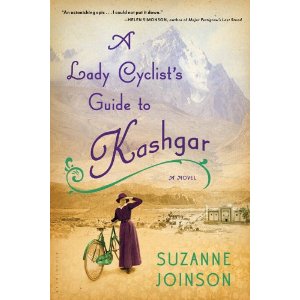
Review: A Lady Cyclist's Guide to Kashgar


This story follows the lives of a handful of people whose paths cross and are connected in various ways. Joinson's tale skips between modern day England and 1920's Northern China, and both the characters and the world they live in are brought to convincing life.

Frieda, in modern day London, is a young woman whose life is in some disarray; both her career and relationships. She finds Tayeb, a filmmaker forced to flee his native Yemen, sleeping outside her apartment. Inviting him in they become friends and he begins to help her with emptying the apartment of a old lady who has died, and although Frieda does not know who it is, has been identified as the next of kin.

In Kashgar, a trio of lady Missionaries venture into Kashgar in remote China where they become involved with the death of a woman giving birth. Eva, our narrator for these chapters, must help take care of the baby whilst the women are held in house arrest awaiting trial for the murder. Their mission is lead by Millicent, a blinkered authoritative woman, and also with them is her sister Lizzie who is dizzy and somewhat intoxicated by Millicent.

Each of Eva's chapters begin with a quote from 'The Lady Cyclists guide', a book which Eva has brought along on the journey along with her bicycle. These quotes have an old school charm of their own and the anonymous author becomes another character of the book.

What I enjoyed most about this book were the many little details and observations that bring the world to life. Similarly the characters all have unique voices and their motivations in life are easy to understand and empathise with. Tayeb's chapters, for example, capture a believable portrait of what England must be like to an exile without papers; always moving, always at risk of being discovered and sent home.

The story moves at a moderate pace and everything is tied up nicely at the end. In summary a richly interesting and enjoyable tale that has been finely crafted.

Thursday, August 2, 2012

Road trip 2012

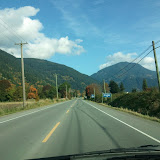
In 2010 we went on a family road trip through the Rocky Mountains to Edmonton from Vancouver.  Having enjoyed it so much we did it again this year.  In case you're planning a similar trip here's some info on the driving times and hotels for our route, which went Eastwards to Calgary via Banff, then up to Edmonton, and finally back through Valemount.

Day 1: Drive to Golden from Vancouver. Approx 8 hours driving.
Stopped at Kamloops for lunch
Stayed at the Travelodge Golden, which is a bit old and dirty. Not recommended


Day 2: Drive to Calgary. Approx 4 hours driving.
We had time to stop at Lake Louise in the morning and spent the afternoon in Banff
Stayed at the Thrift Lodge Calgary University. Quite old. Very cold outdoor swimming pool. Not recommended.


Day 3, 4, 5: Drove to Edmonton stopping at Drumheller. Approx 6 hours driving
Stopped at the dinosaur museum and had lunch there
Stayed at Days Inn West Edmonton for three nights. Very nice hotel, highly recommended.


Day 6: Drive to Valemount, BC. Approx 7 hours driving
Stopped several times on the way, not much to see. Did not buy a park pass, although you could do so and stop in Jasper.
Stayed at Chalet Continental Hotel. Old but clean and good service. Pool, play area and spa.


Day 7: Return to Vancouver. Approx 8 hours.
Stopped in Kamloops on the way back.

You can view all the albums from this post here:

https://picasaweb.google.com/114273475760942493764


Friday, May 25, 2012

Book wish list

I'm currently making my sluggish way through the fifth (of seven planned) Game of Thrones "Dances with Dragons" and I've also started "Dickens" by Peter Ackroyd which is perhaps the biggest book in the world (1200 pages and weighs nearly 4lbs. Once I have read it I will probably use it as furniture). So although I went to Chapters yesterday and found a bunch more books I want to read, for now they are just on my wish list.

I loved Oliver Sacks's "Man Who Mistook His Wife for a Hat" in which he talks about some of the patients he had as a neurologist. I can't say I've ever done that, but I've certainly done things almost as daft and I'm not even officially mentally ill. Anyway, I loved his writing style, and in this book Sacks heads off to Mexico to write about Ferns. Not that I am at all interested in Ferns but from the book jacket it sounds full of interesting anecdotes.


Not on the shelf for another week. "A Lady Cyclists Guide to Kashgar" is the first book from Suzanne Joinson (disclaimer she is a cousin) and it's published by Bloomsbury. I love the cover and the idea and can't wait to check it out.


A staff pick at Chapters... Mr G tells the story of creation as told by God. “As I remember, I had just woken up from a nap when I decided to create the universe.”. Sounds awesome.


I read most of Neal Stephenson's books but he lost me a bit with his Baroque Cycle. While it has some good characters and lots of historical information, it got too long for me to follow. Maybe when I retire I will revisit these on a chair overlooking a lake, occasionally calling a nurse to come and turn the page for me.


This is a neat book... I need to learn some CSS3 right now, and this is a nice thick book filled with screen shots of what the code does. Also seems to be quite detailed unlike a lot of the 'quick' guides to things.


That's all folks.

Sunday, February 19, 2012

The Secret World of Arrietty


This is the 9th review I'll have written about a Studio Ghibli movie, but the first that I have seen in the theatre. We went along for to see the North American release of the 2009 movie, which has been dubbed in French and (British) English already. As a kid I really enjoyed the Borrowers books by Mary Norton, but I can't say any of the movies and tv shows based on the works impressed me much. So it was pleased to hear that Studio Ghibli were making the movie, and in fact the founders of the studio have been thinking about doing so for 40 years!

Borrowers, if you do not know, are 10cm tall people that live hidden in our houses, and get along by 'borrowing' things that we won't miss. Borrowers must never be seen, as once curious humans are dangerous, so once spotted they must uproot and move to a new home immediately. This movie takes the Borrowers story and relocates it in Japan, telling it the style of the many Ghibli movies before it.


The story begins when a young boy, Shō, is driven to the house in Tokyo his mother grew up in, to stay with his Great Aunt. While his Aunt goes into the house alone, he investigates the garden where a large (fat) cat is investigating a bush. The cat takes off and Shō catches a glimpse of our hero Arrietty as she slides down the stem of a flower and out of sight. Later that night we join Arrietty in the Borrowers home, as she prepares with her Father for her first dangerous journey up into the house to acquire sugar and tissue paper.


As with all Ghibli movies, the heroes are the children. The adults may be busy, sick, turned into pigs or just not give a damn, whilst the kids are independent, fearless and trying to grow up. In this movie the father is a strong yet silent type who obviously runs a tight ship with his family but is not afraid to let Arrietty grow up and take on dangerous work. The mother is more of a worrier, very comfortable in her little Borrower home and not wanting anything to change that. Of course Arrietty soon gets into adventure, or misadventure, with her parents nowhere to be seen.


Having seen a lot of animated movies aimed at kids recently, it was refreshing to watch one where the pace of the story was slow and thoughtful. Rather than being 90 minutes of action and drama, there is time for tension to build as the characters face increasing danger. There is time to watch amazingly animated beetles, centipedes and ants interact playfully with Arrietty, and for the sour faced fat house cat to play with Shō as he lies on the grass.That said there is plenty of action too, and the movie is never dull. It should appeal to most age groups.

The audio is notable, in that the sounds of everyday objects have been amplified and deepened in pitch so they become alien and scary when heard as if through the ears of the tiny people. I thought the soundtrack sounded like it was influenced by Irish or Spanish folk music, and really suits movie, but in fact was created by French musician Cécile Corbel. From Wikipedia:

"Corbel also performed the film's theme song, "Arrietty's Song", in Japanese, English, French, German and Italian. Corbel became known to Ghibli filmmakers when she sent them a fan letter showing her appreciation of their films, together with a copy of her own album."

There's no need for me to say that the animation and backgrounds are gorgeous, but it's certainly amongst the top three Ghibli movies. In particular the animation of the creatures in the movies is both lifelike and at the same time they have a lot of personality. The Borrowers house is as richly detailed as the real house upstairs.


Much as I love all the Ghibli movies, this is now among my favourites. Arrietty is a strong, attractive and likable character, whilst Shō is a tender and pleasant one. The movie explores some serious themes without getting too morose or serious, and gets nostalgic without being sentimental.

Monday, February 6, 2012

Ocean Waves

A while ago I set myself a goal to watch and review all of the Studio Ghibli movies, since I enjoy them a lot, and I wanted a way to remember what each one was about. (I am losing my marbles you see.) Here's my eighth one.


Ocean Waves was made for Japanese television, directed by Anime producer Tomomi Mochizuki, his only Ghibli title. Despite being made for TV it ran over budget and over time (when does anything good not?).

Set in a rural city of Kōchi on the Japanese island Shikoku, it's a high school "love story" of sorts. The main characters are friends Taku Morisaki and Yutaka Matsuno. Strong willed they make a stand alone against the school authorities when a school trip is cancelled due to poor academic performance. (The kids instead get to go to Hawaii, my heart bleeds!) Japanese school children being much more deferential to authority and elders, their behaviour is quite something to the other kids. Taku in particular seems an independent and strong willed fellow.


Meanwhile, following a marital break up Rikako Muto must attend the high school in Kochi having previously lived in Tokyo. She quickly moves up the schools academic league table, and feeling more sophisticated than the other students in Kochi she doesn't make friends. Instead she is defiant and doesn't take part in school activities.


Needless to say the boys are attracted to Rikako. Yutaka expresses this openly to his friend Taku. As the story unfolds Taku connects with Rikako. Initially they mock each other, but Taku helps Rikako and she quickly decides that she can both trust him and exploit him to enact her plan to visit her father in Tokyo.


Taku has to do all the work in this story, both to maintain his friendship with Yutaka and Rikako, but he never seems to be bummed by it, and his personality is refreshingly strong and positive.


This movie won't appeal to kids as the story line is too mature to be interesting (not that there is anything inappropriate though). I really enjoyed it however, it's typical Ghibli. Beautifully drawn and animated in the usual style. The characters and the world itself feel fully real.

Tuesday, October 25, 2011

Occupy Vancouver

Took some shots at the Occupy Vancouver protest taking place at the Art Gallery on Monday. Nothing particularly exciting going on. There are more people smoking dope there on a normal day. In fact it was remarkable how clean and tidy the camp was. Very Canada.


Posted by Picasa

Sunday, October 23, 2011

Austin Trip

Austin trip
I've never been to Texas before so I was excited to head down to Austin for this years GDC Online conference. Arriving in the evening we headed straight for 6th street which was very lively, with rock and blues bars blaring out music.

On the first night I watched blues at a live jam session. The music was awesome. At one point a local middle-aged Dell employee in a boring blue business shirt and grey pants and very little hair took the stage. Turned out he was an awesome drummer.

Next night we went to movie theatre, also on 6th, called the Alamo Draft House where you can order beer and food from your seat which is then brought to you while you watch the movie. (We watched Drive, which is kick ass by the way).

Finally on the last night I went to a coyote ugly style bar. It seemed quite normal at first, but after a few minutes the waitress climbed on the bar and danced along it, pouring shots into the mouths of anyone she decided seemed to need one.

Last day before I flew back to Vancouver I took a quick walk around Austin. I went up to see the Capital building, and then down to the river, where over 1 million bats live under a bridge there. Even though it was day light you can still hear them all fidgeting and gossiping to each other in my video.

A day at Harrison Hot Springs

Saturday was a bit of a wash out, so I wanted to do something on Sunday that would be fun even if it was still raining. Harrison Hot Springs has a public indoor pool, sourced from two hot springs at the end of Harrison Lake.

Amazingly the sun came out and it was beautiful drive along route 7. We had burritos at Muddy Waters Cafe before heading to the pool. Lunch was pretty good, but priced for tourists. The hot springs were fun. The public pool is in an old building, but is clean enough and the water temperature was somewhere between a pool and a hot tub. There were about 10 people in the pool at any one time and there are loungers around the side so you can cool off and look out the window at the lake, which was stunning.

The drive out from Port Moody was about 2 hours including stopping for snacks and gas. A great day.

Saturday, June 18, 2011

Vietnamese chicken stir fry


For some random reason I decided to have a go at some Vietnamese style cooking. Starting off nice and easy I made this chicken stir fry. Actually this is the second time I made it, having made it last week too, and this week incorporated some of the suggestions of my food critic family.

Ingredients

Lemon grass. (Sliced lengthways then finely chopped, about 2 tbsp)
Garlic (2-3 bulbs chopped and crushed)
Fish sauce (2 tbsp)
Chilli sauce (1 or 2 tsps)
Bean shoots (2 handfulls)
Chicken breasts (2 large ones, no skins)
Cilantro (small handful, chopped)
Snow peas
Carrots


What you do

Although I didn't do it due to lack of time, you're supposed to combine the lemon grass, chilli and fish sauce with the chicken and marinate it in the fridge for an hour.

Also due to lack of time I cooked the carrots by slicing them and sticking them in the microwave for 3 minutes, so I could throw them in with the snow peas and not have to wait for them to cook through.

Then fry the chicken for a few minutes until all white then put it on a plate, fry the onions, garlic and lemongrass. Once they're soft add the chicken. Once that lot is cooked through and you're a few minutes from done, throw the snow peas and carrots in. Finally throw in the bean shoots and cook for a couple of minutes.

I served it on steamed rice as you can see.

Family reaction

With just a tsp of chilli this is not too spicy for kids or adults afraid of spice. It's quite a dry dish so I added a little chicken stock. It's filled with tastes. The lemongrass in particular makes the dish very fragrant. Last week I made this with yellow and red peppers instead of carrots, and they had a flavour that did not compliment the dish.

In general the family liked this meal a lot. I'm looking forward to trying something more advanced.

Wednesday, March 30, 2011

Princess Mononoke

I'm trying to watch and review all of the Studio Ghibli movies... here's my 7th one:


Princess Mononoke (1997) is written and directed by Hayao Miyazaki. It has a similar theme to a lot of other Studio Ghibli movies (Castle in the Sky and Naussica as examples), the battles between humans and nature. The story follows the adventures of Ashitaka, who is a brave young warrior who battles a giant cursed Boar in the opening scenes of the movie. Mononoke means monster or spirit.


(This is the Japanese movie poster. I think you can see why they changed it for the US audience. A girl with a bloody mouth and a knife would not sit well on the walls of the local theatre)

The village elders convene and determine that he must journey to the West in order to find out what is happening there to drive evil their way, and possibly find a cure to his curse, which otherwise will kill him.


Arriving in the fortified mining colony of Tatara, he quickly wins the trust of the people there with his fighting skills. The town is battling the creatures of the forest, and San (a girl raised by a giant White wolf god) who are trying to stop the humans from chopping down all the trees to mine iron ore. Lady Eboshi (voiced beautifully by Minnie Driver in the English version), is leading the fight against the forest with her army and with guns. It turns out a pellet from one of these guns is what turned the giant Boar evil in the beginning.


Ashitaka meets and gains the trust of San which leads to animosity when he returns the town. There is conflict between the creatures live in the forest and don't want the trees to be chopped down and the humans want to destroy the forest in order to mine and build their town into a powerful and rich city. Even the humans are conflicted and complex characters.

Much of the movie is action packed battle with packs of giant creatures swarming through the forest. Ashitaka rides an Elk which is beautifully drawn and animated. The giant Wolf gods, Boars and the spirit of the forest are all believable yet extraordinary.


This is a new favourite of mine, a deep and sophisticated story, but quite light and filled with humour. I'm surprised I didn't come across it earlier, because according to the wikipedia page it was a huge hit in Japan; the highest grossing movie until Titanic in fact.

Sunday, March 20, 2011

The Housekeeper and the Professor


I love when a tip for a good book comes from such a random source as this one did. I was reading the website Quora, and the book "The Housekeeper and the Professor" was recommended in the comments to the answer to a question.

This is the story of a Japanese housekeeper and single mother who starts to take care of a 64 year old mathematics professor who was long ago injured in a car accident. As a result his memory lasts only 80 minutes, and although he can remember his past up to then, he can no longer form new memories.

The agency our housekeeper narrator works for has already sent 8 people before her to care for him, so no doubt there are difficulties. She is hard working and adaptable however, and receptive to him as he communicates in the only way he knows; via the timeless language of mathematics. When meeting someone for the first time (which may not really be the first time at all for them), he will ask for their birthday and find interesting properties of that number. For example the housekeepers birthday is 2nd Feb, 222, which forms an amicable number with 284, the serial number of his watch.

Maintaining some rudimentary form of long term memory via post-it notes on his suit, he remembers the housekeeper by a simple doodle, and that she has a son. He has a note prominently located to remind him "you have only 80 minutes of memory".

Soon he discovers that her son is a latch key kid, and tells her to bring him with her in future, and so she does. The professor loves children and his relationship with her son, who he calls root because his head looks like the square root symbol, is very warm and endearing.

The book reminds me of a sort of mathematics imbued version of Nick Hornby's Fever Pitch, because the characters connect through the sport of Baseball, just as in the latter they connect over soccer. This all starts when the housekeeper finds a box of baseball cards in the professors cupboard.

Yoko Ogawa, the author, is knowledgable and able pass on her knowledge and passion for mathematics and numbers to the reade. The whole book is about finding ways to connect with people, about the joy and timelessness of numbers and their properties. Despite being a translation from Japanese to English, there's no mistaking the truth and warmth of this story.

In case it's not clear, highly recommended.


Sunday, February 6, 2011

Only Yesterday

This is my sixth review of Studio Ghibli movies. I watched "Only Yesterday", which is by the same director as Grave of the Fireflies (Isao Takahata). Disney own the US rights to this movie, and have not distributed it yet [ahem]. The main character, Taeko, appears in the story both as her grown up (27) self, and as a 5th grade schoolgirl.


This is a movie that accurately captures feelings of unachieved dreams, of living a life that your 5th grade self would not feel comfortable with. Bored with her city life in Tokyo, Taeko takes a trip to the country (Yamagata) to visit her sister inlaw. She meets Toshio, and works with him in the countryside where he is a farmer. Toshio is passionate about nature, organic farming, and this captivates Taeko.


The film keeps switching back and forth between our present day Taeko, and her 5th grade self. Her schooldays reflect the day to day ordeal of school social life, and her alienation from her parents. Her two sisters simply study and do well at school. But Taeko seeks a deeper understanding of the material, and finds it more difficult to learn what she needs to by passive acceptance and rote. This is interesting as I was exactly the same at school. She instead prefers to put effort into her own interests, and in going the extra mile in her minor part in a school play she is noticed by a town theatre company and asked to star in thir own production. Sadly her father does not see this as something good for her and prevents her from attending. Her relationship with her father is particularly difficult, as he is a stern and rough man.


The animation is realistic, especially in the facial expressions, although the 5th grade scenes are drawn in a simpler style, perhaps to contrast the simplicity of childhood against modern life. Only Yesterday portrays nicely not just falling in love with another person, but falling in love with another life, as one often does on vacation or when visiting another place. At times Taeko's 5th grade self is right there with adult Taeko in the same scenes, and perhaps this is the theme of the movie: your childhood self is always with you, and always you can judge yourself from those early innocent days, when the realities of adult life were not upon you, and the sky was the limit.

Saturday, January 1, 2011

Book mini-reviews from 2010

I've been wanting to mini-review the books I read in 2010 and New Years Day is a great time for that so here goes. I hope I don't forget too many of them, and they are in no particular order.

Life of Pi, Yann Martell

I started reading this years ago and wasn't at all interested in the first few pages, but a friend of mine urged me to try it again so I did. The quality of the writing is truly breathtaking; I sometimes take notes of my favourite parts, but there were so . I can't say much about the story without spoiling it, but I can say that although the story has a mundane start (a schoolboy talks about his life as the son of a zookeeper in India) it soon spins off into a dizzying adventure.

Very readable, full of vivid detail and exciting.

Beatrice and Virgil, Yann Martell


I was excited to read Martell's latest book, as it is a long awaited sequel to his prize winning Life of Pi. Surprisingly, this is a very different kind of book. The narrator is a succesful author, who has written a prize winning book and is trying to write a worthy sequel. Hm, sound familiar? The protagonist finds an interesting looking taxidermist store and befriends the owner. In fact, befriend is not quite the word since the store owner has very poor people skills to say the least. Nevertheless, recognizing his customer is a famous author, asks him for help writing his book "Beatrice and Virgil" which is an allegorical tail alluding to the Hollocaust.

Just like Life of Pi the writing is beautiful, but this is a very different kind of book to the adventure novel that Life of Pi is. This is more of a pondering and thoughtful story, where you're never quite sure whether you are hearing the words of the real life author, the books narrator, or the characters within the book. Can we say it's like the movie Inception, without the action and the girl?

Worth a read for sure.

The Alchemist, Paulo Coelho

Beautifully written tale of a shepherd who leaves home to find his fortune. The core philosophy of the book is that if you really want something, the Universe will help you get it. Presumably you have to take the risks and put the effort in also.

Thanks to a friend for lending me this (she had 10 of them on her for a book club), and I read it in a day. Partly because it's short, and partly because I didn't want to stop reading.

Blink, Malcolm Gladwell

Having read "The Tipping Point" a while back I was keen to check out anything by Gladwell. Blink is about the subconscious and very rapid abilities of the human mind. There are examples of how succesful professionals working in Marriage Guidance, law enforcement, art valuation and medical diagnosis, use very short periods of experience to make succesful judgements. This being contrary to our expectations that a slow rigorous analysis should yield better solutions. It appears that in many cases, our gut feel is right.

Just like his previous books he talks with authority and depth on the subject, spinning his research into fascinating yarns that makes it a very enjoyable and informative read.

Outliers, Malcolm Gladwell


Just as in Blink, the anecdotes are richly detailed and compelling. This book is about the people that succeeded in life in a big way, and why. Comparing them with others around them that had the same level of intelligence or diligence, yet not the right environment. We like to think that hard work and talent can get you to the top, but this book explores the uncomfortable truth that the right school, the right neighborhood, the right race can make all the difference. Would Bill Gates have been the man he was if he hadn't had access to one of the very few time sharing computers in the US? If he hadn't had family connections to get his first programming work?

In addition to exploring the successes and how they may have been aided by their situation in life, he explores the failures. Christopher Langan, an extremely bright man with an IQ of 196 who now works on a horse farm. Born into an environment with nobody to help him, he had to find his own way. According to Gladwell the lack of an appropriate environment prevented Langan from achieving the academic and worldly success he could have had.

I can't help feeling that his examples of success are extreme "lottery win" kind of life stories not that applicable to 99.99% of most of the population. The same goes for Langan's story. How many people with exceptional minds would fail to get a scholarship and into a good college today? Only a very few outliers I would expect.

Summer Blonde, Adrian Tomine


This is one of many graphic novels I picked up in Vancouver Public Library, where they have an excellent selection. Summer Blonde is a collection of four short stories. They are pretty dark and gritty exposes of the lives of regular people. Both the characters and the artwork have a fine detail that makes it believable. The stories are of peoples difficulties relating to each other.

A Drifting Life, Yoshihiro Tatsumi

This is a beautiful looking book that I've seen in local bookstores a few times but didn't think it looked worth the $50 Canadian coverprice. Having picked it up at Vancouver Public Library I think I was right, but it was definitely a good read. In this manga work, Tatsumi writes the story of his late teens and early professional life. Full of detail and fascinating insights into the hard work and thought processes that go into becoming a huge success at what you do. Also you can enjoy it as a coming of age story, as Tatsumi and his peers emerge from their teens and become men in the real world. Even if you're not particularly interested in the technical and philosophical ideas of manga as Tatsumi discovers and relates them in the book, it's a very entertaining read.

Thirteen Tale, Diane Setterfield

One of the few I reviewed right after reading it. See here

Real World Haskell, O'Sullivan

A nice, fat, accessible book on Haskell. Just as the title promises it's filled with real world applicable code. For example a functioning bar code reader is developed, as well as examples of GUI, DB and web programming.

The beginning is well paced and I advanced quickly, but the mid-section of the book becomes a bit harder to follow and you find the code jumping through abstract looking hoops in order to complete the most basic of imperative tasks. I don't know if that's just the way Haskell is, or whether the authors just think that way.
Definitely worth using this book to kickstart your Haskell learning if you want to use the language.

The World According to Garp, John Fielding

Thanks to a twitter friend, I discovered this excellent John Fielding 1978 book. Something like a cross between Henry James and the UK's Tom Sharpe, this is funny, sexually explicit tale following the weird and exciting life of Garp, the illegitimate son of a large than life, rebellious and independent nurse. Like the author, who also spent time in Vienna, Garp and his mother also spend time in that city, but most of the story takes place in the up-market boarding school where Garp's mother takes care of the students.

Highly enjoyable, I look forward to reading more by Fielding.

Inu Yasha and Fruits Basket

Two of the biggest selling manga series, and I checked them out due to their ubiquity. Neither of them compelled me to read past the second book. They are probably aimed at teenage girls, but regardless I wasn't entertained in the least.

Genshiken, Shimoku Kio


This story of a group of Otaku college students who join and run a club called "The Society for the Study of Modern Visual Culture" is now my favourite manga series (although I have not read many), and I truly wish it were longer.

It follows the group through their college lives as they hang out, play video games, create and sell their own fan fiction and deal with the school administrators. Highly nerdy, it even includes reviews of characters from an imaginary video game at the end of each chapter. The characters are great, the story is epic in its lack of excitement, and yet compelling as hell. I love it.

Darwins Radio, Greg Bear

This scifi tale reads more like a Tom Clancy thriller, as scientists try to find a solution to a virus that is causing women to miscarry. It's about the characters conflicts with government agencies and corporate politics rather than futuristic science, and I didn't enjoy it that much. It was interesting to read up on some of the science behind the book though...

http://en.wikipedia.org/wiki/Endogenous_retrovirus
http://en.wikipedia.org/wiki/Horizontal_gene_transfer

Effective Java, Joshua Bloch

I read this book as I'm currently working a Java server that is designed to handle 10 to 50 thousand users at one time, so efficiency and concurrency is vital. Bloch is a fantastic communicator, and the book is very to the point, organised in highly effective (sorry) way.

That's all for now, there's another few I've forgotten that will appear in a later post.